
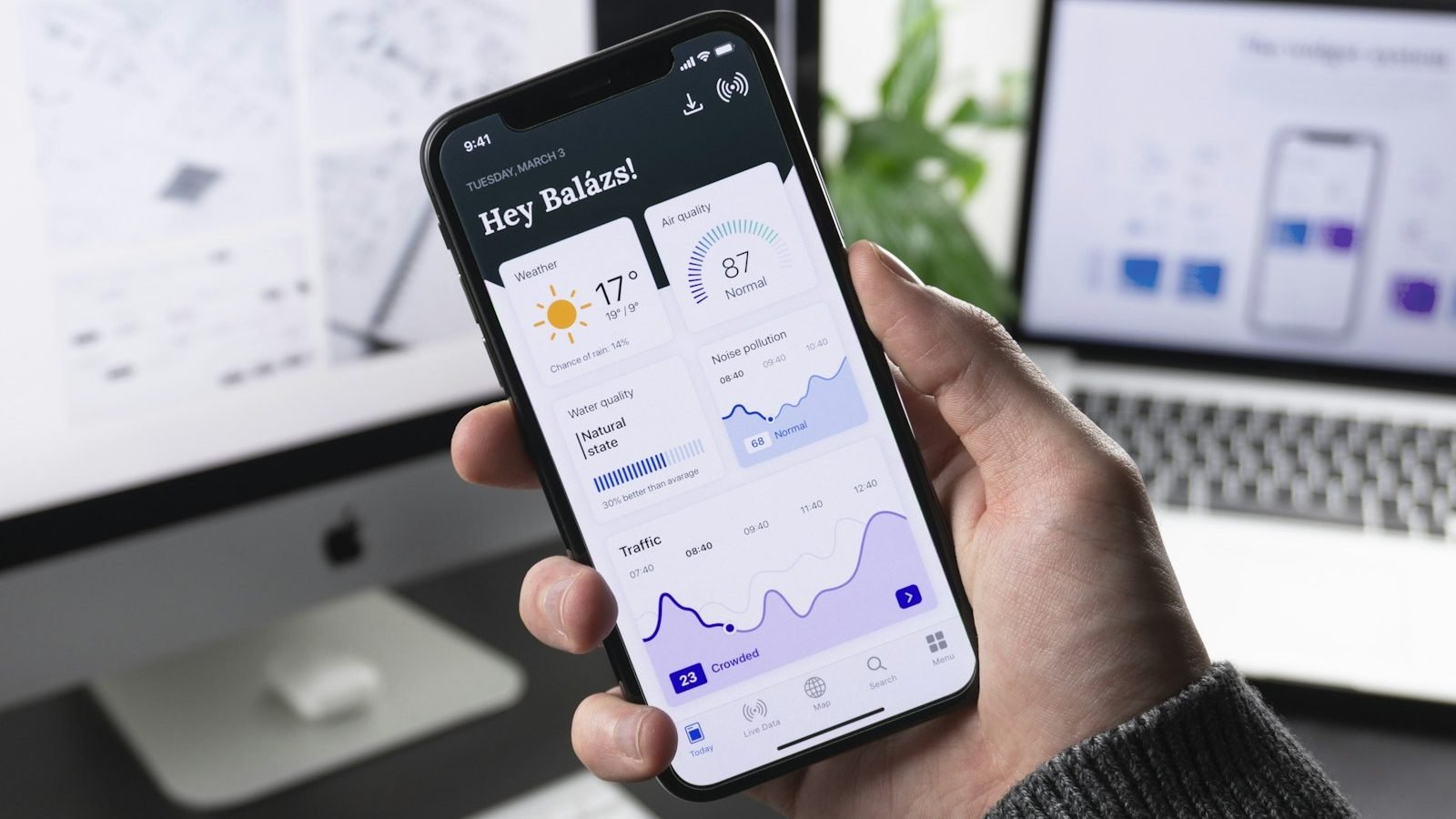
“Uber for X” sounds like one app. It is actually at least three: one for the customer placing the request, one for the driver or provider fulfilling it and a back-office panel where your team keeps the whole thing running. Underneath sits the hard part, the logic that matches requests to providers, moves money between them and keeps everyone’s screen in sync.
Founders often underestimate that middle layer. We plan for it from the first conversation, because changing how matching or payouts work after launch is far more painful than getting the basics right up front. A platform where providers get paid late or customers see the wrong arrival time loses both sides quickly.
The three parts of an on-demand platform
Customer app
Sign up, browse or describe what is needed, see a price or estimate, book now or schedule for later, pay, track progress live, chat with the provider, rate the experience. Every extra tap here costs you orders, so the flow has to be short.
Provider or driver app
Go online and offline, receive and accept jobs, navigate, update job status, upload proof of delivery or completion photos, view earnings and payouts. Providers use this app for hours a day, often in a car or on a job site, so it needs large buttons, clear alerts and good behavior on weak connections.
Admin panel
The web dashboard where your operations team approves providers, sets pricing and service zones, handles refunds and disputes, watches live activity on a map and pulls reports. This is the part that decides if your business can scale past a few hundred orders without hiring a room full of coordinators.
On-demand app development by industry
The core is similar across markets. The details are not.
- Food, grocery and parcel delivery: multi-stop routes, store or restaurant dashboards, delivery time windows and proof of delivery.
- Home services: cleaners, plumbers, electricians and handymen. Quotes before booking, provider background checks, skill-based matching and service guarantees.
- Booking platforms: salons, fitness trainers, tutors and car washes. Calendar availability matters more than live GPS.
- Telemedicine: appointment booking, secure video visits, intake forms and prescription workflows, with privacy requirements like HIPAA in the US shaping the architecture.
- Ride and transport: fare calculation, surge rules, driver document verification and safety features.
Real-time tracking, payments and dispatch
Live tracking means the provider app streams location while a job is active, and the customer app shows it on a map with an updated arrival time. We use Google Maps or Mapbox and design the updates to save battery and data.
Payments in a marketplace are more complicated than a normal checkout. The customer pays, your platform keeps a commission and the provider gets paid out later, sometimes with tips, cancellation fees and refunds in between. We typically build this on Stripe Connect or a similar marketplace payment service, which also handles provider identity checks for payouts.
Dispatch is how a job finds a provider. Simple platforms broadcast a job to nearby providers and the first to accept wins. More mature ones assign automatically by distance, rating, skills and current workload. We usually start simple and add smarter rules once there is real data to tune them.
Launch one city first
Our strong advice: do not try to launch everywhere with every feature. Marketplaces live or die on having enough supply and demand in one area at the same time. Pick a city or a neighborhood, launch with the core flow and grow from there.
A first release that covers all three apps with booking, tracking, payments and a working admin panel usually takes several months. Cost depends on the number of service types, pricing complexity, dispatch logic, compliance needs and the choice between cross-platform and native apps. Our mobile app team builds the customer and provider apps, and the back end and admin panel are handled the way we approach any custom software project. Once you are live, our PPC advertising team can help with the local ads that bring in the first customers.
Thinking about an on-demand business? Walk us through your idea and we will map out what a first launch could look like.